


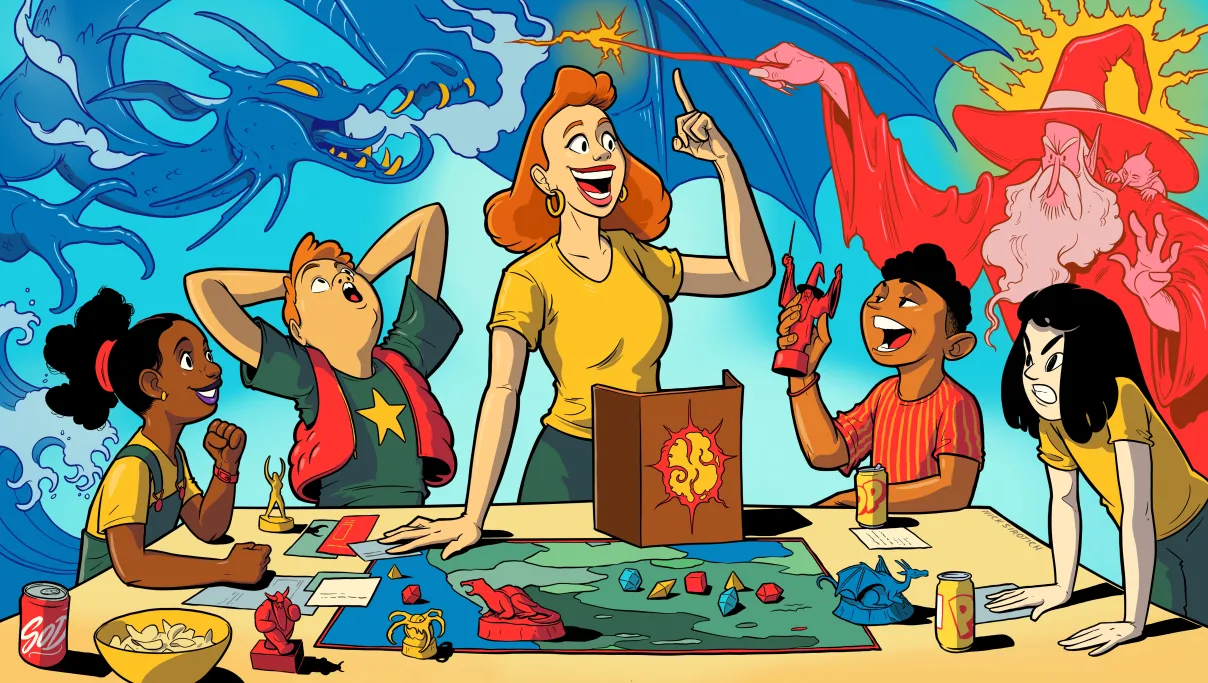
Children ages 8–18 in the United States spend up to seven hours a day on their screens. With concerns about screen time, social connection, and youth mental health continuing to rise, many parents are looking for activities that do more than simply entertain. Families are looking for hobbies that foster creativity, communication, and meaningful face-to-face interaction while supporting their children's development–and tabletop roleplaying games (TTRPGs) fit the bill.
To learn more about how TTRPGs affect children and teens, StartPlaying surveyed 750 U.S. parents whose children participate in games such as Dungeons & Dragons and other tabletop RPGs. Parents shared what changes they have observed in their children's communication skills, creativity, academic engagement, social development, screen habits, and family relationships. The results reveal why many families see tabletop gaming as more than a pastime — and why its popularity continues to grow, such as with programs like Young Heroes.
Key Takeaways
- Nearly 9 in 10 parents (86%) say TTRPGs deliver benefits beyond entertainment, with more than half (55%) calling them either a meaningful skill-building hobby or one of the most valuable activities their child does.
- Collaboration and empathy are the standout gains: 77% of parents say their child is better at working toward a shared goal, and 74% report improvements in understanding other people's perspectives.
- 7 in 10 parents report improvements in speaking up in group settings (70%), along with explaining ideas clearly (65%) and listening while others are speaking (65%) since their child started playing TTRPGs.
- TTRPGs may be the unlikely academic booster parents didn't see coming: 46% report a larger vocabulary in their child, 44% say their child reads more willingly, and 47% say their child became more curious and asks more questions.
- Nearly half of parents (47%) say their child now spends less time on passive or solo screen activities since picking up TTRPGs, while only 20% report an increase.
- More than half of parents (51%) say their child became more comfortable socializing in person, and 27% say their child seems less lonely or isolated since they started playing.
- 55% of parents say the hobby has increased time spent together as a family, with 21% noting a noticeable improvement in quality family time.
- 83% of parents say they are likely to recommend TTRPGs to another parent, with 44% saying “very likely.”
How Parents View Their Kids' TTRPG Hobby
The modern board game market is a multibillion-dollar industry, with adults and children alike finding joy in games both new and old. This is heartening in an era where parents are worried about screen addiction and the adverse effects of social media. TTRPGs, in particular, offer children and teens a hobby that’s not only fun but also intellectually stimulating. This makes it surprisingly popular among both parents and their children.
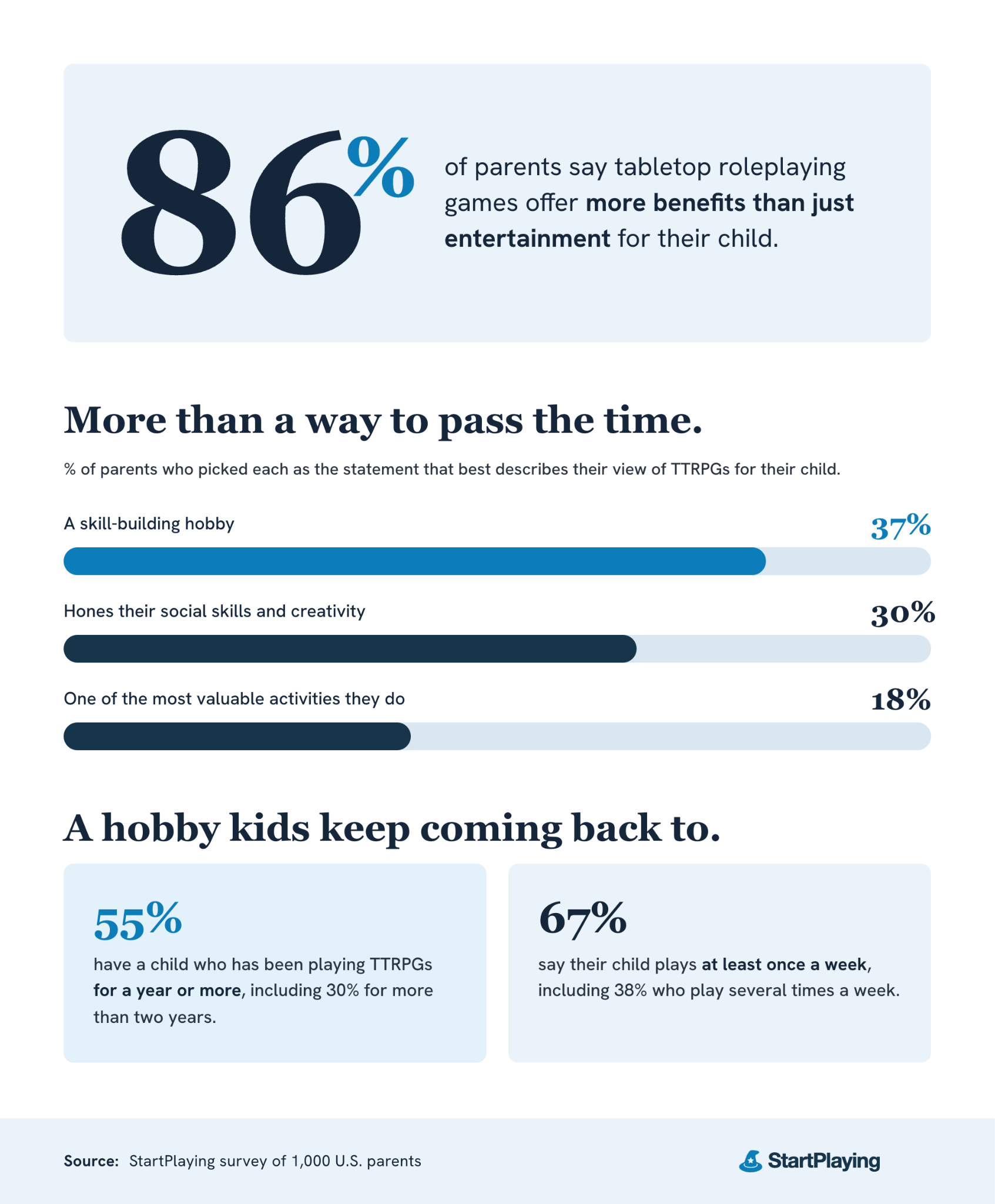
The majority of parents (86%) agreed: tabletop RPGs offer more benefits than just entertainment. This included 37% who considered them a skill-building hobby, and 30% who said it honed their child’s social skills and creativity. Another 18% went as far as to say TTRPGs are one of the most valuable activities their child does. These games are parent-approved while still fun; a critical balance to strike when competing against deliberately addictive apps and online games. Because of this, 86% said they’re likely to recommend TTRPGs to other parents.
For many kids, this isn’t a passing hobby, either: 55% said their child has been playing TTRPGs for a year or more, including 30% who have been playing for more than two years. Once a campaign ends, kids are ready to start a new adventure as soon as possible, and often, alongside their families. Over two-thirds (67%) of respondents said they play TTRPGs at least once a week, including 38% who play several times a week. In lieu of traditional board games or movie nights, TTRPGs are becoming the activity families bond over.
In the past year, 68% of respondents said they’ve played TTRPGs at home with family, rolling dice and slaying monsters alongside relatives. Over half (58%) said they’d played with a parent or guardian, and 62% had played with siblings or other relatives. But people are finding party members outside of their immediate family, as well: 56% have played TTRPGs with friends or peers in the past year. Tabletop games are more than just a way to pass the time; they’re becoming an integral part of many American relationships.
Rolling A Nat Twenty In Persuasion: How TTRPGs Improve Communication Skills
Convincing an innkeeper to let your party stay the night at half price is a learned skill. Once kids master it, those same communication skills carry over into everyday life. Negotiating plans, resolving conflict, and working toward a shared goal are all vital skills to TTRPG gameplay that prepare kids for the real world.
.png)
More than three-quarters (77%) of parents said their child is better at working with others toward a shared goal than they were before playing TTRPGs. A similar share (74%) said their child is better able to understand other people’s perspectives, and 69% said their child is more considerate of others’ feelings. Nearly two-thirds (66%) said their child had gotten better at compromising when they disagree since playing TTRPGs. These skills are crucial to developing strong friendships, and having a low-stakes place to disagree safely lets them practice these skills without social consequences.
Even outside of interpersonal relationships, playing TTRPGs can give kids more confidence to communicate in large group settings as well. Seven in ten parents (70%) said their child is more likely to speak up in group settings than they were before playing tabletop games, and 68% said their child is able to explain their ideas more clearly. Kids aren’t just becoming better communicators either: they’re becoming better listeners. Over two-thirds (67%) of parents said their child has become better at listening to others since playing TTRPGs. Having to listen closely for clues in a game translates to listening in class, at the dinner table, and beyond.
Because of all these benefits, parents see tabletop games as an invaluable supplement to their child’s development. Over half of parents (59%) said that TTRPGs are better at helping kids practice communication skills than any other activity or tool. Turns out defeating ghouls and saving the world is the best way to practice real-world communication.
TTRPGs Help Kids Think Creatively
For both game masters and party members, the best-laid plans can fall apart once the game begins. But this is part of the appeal of TTRPGs: having a safe place to practice problem-solving and find creative solutions to their problems. More than any other popular activity for kids and teens, TTRPGs encourage creativity and confidence.
.png)
When comparing TTRPGs to other activities their kids do, tabletop games consistently come out on top. Parents say that on top of boosting their child’s confidence (64%) and encouraging their creativity (61%), TTRPGs are better than any other pastime at teaching problem-solving skills (72%). Kids learn through play, and to their developing brains, navigating a fictional conflict is just as valuable as solving a real-world one.
So, how do these problem-solving skills show up in everyday life? Here are the behaviors parents are noticing after their kids make tabletop games part of their routine:
- 74% said their child has improved at thinking through choices before acting;
- 75% said their child has improved at sharing creative ideas;
- 71% reported improvements in coming up with creative solutions;
- 70% said their child is better at adapting when plans change.
When kids know they have the skills to solve their own problems, their confidence grows. A kid with strong communication and problem-solving skills makes for a natural leader, and parents are noticing. Three-quarters (75%) of parents said their kids feel more comfortable being themselves around their peers, and another 64% said their child feels a stronger sense of belonging through TTRPGs. More than two-thirds (68%) said their child is now more comfortable serving as a leader within a group, confident that if they can lead their adventuring party to victory, they can help lead a group project. Learning these skills early on gives kids a chance to hone them before entering college and the workforce, making for more capable adults later on.
The Academic Spillover
Across the nation, approximately 40% of students cannot read at a basic level, and the number is even higher among young students. Excessive screentime and overstimulating media are causing kids to chase short-term entertainment, to the detriment of their own literacy skills. But TTRPGs have the opposite effect: by challenging their brains and taking them to new worlds, tabletop games can make a great supplement to traditional academics.
.png)
After embarking on an adventure with their party, kids want more high-fantasy stories to sate them between sessions. Almost half (44%) of parents said their child reads more often and more willingly after playing tabletop games, and even more (46%) said their child’s vocabulary has improved from playing tabletop games. Another 36% said their child has become more interested in writing, drawing, or creating their own stories. When kids look at tabletop games as interactive versions of the books they love, it makes them want to read more.
But literacy is about more than just reading and writing — it’s our ability to interpret and understand the world around us. Tabletop games help with those harder-to-measure literacy skills, too. Nearly half (47%) of parents said their child has become more curious since starting TTRPGs, asking more questions and wanting to know how the world works. Many of these kids are exploring topics directly related to their tabletop campaigns: 46% said their child is more interested in subjects like history, mythology, science, or geography. Dice rolls are helping supplement what they learn in math class, as well: 35% said their child is more comfortable with mental math or working with numbers.
These skills lead to foundational changes in how children spend their time. Over two in five (44%) parents said their children can stay focused for longer periods of time without a screen now that they play TTRPGs. Two-thirds (67%) of parents reported that their children managed frustration more effectively than they used to. Only 5% of parents reported no academic benefits from tabletop games, meaning the vast majority (95%) observed positive changes extending into the classroom. A gaming session can be so much more than just a fun way to spend an evening; it’s a way to help your child succeed.
Touching Grass By Choice: How TTRPGs Reduce Screentime
Researchers have been sounding the alarm on excessive screen time for years–and we’re beginning to see widespread consequences like depression, isolation, and delayed milestones. Parents of TTRPG players, though, say that the games keep their kids off screens more effectively than any timer or app. Having fun with friends is becoming more popular than scrolling through TikTok–and parents are thankful.
.png)
When kids go online, the way they use these screens matters. Actively using a screen (e.g., gaming, creating, or chatting with friends) can be beneficial for children, while passively taking in content can be harmful to their development. Nearly half (47%) of parents said their child spends less passive time on screens since picking up tabletop gaming, including 15% who said their child spends much less time using screens.
Naturally, many kids want to take their tabletop sessions online, and parents reported that 44% of their children participated in online versions of their favorite TTRPGS. Nearly one in four (22%) were worried that their child’s passive screen time would increase as a result, but 76% of parents said it either lessened or stayed the same. Nearly two-thirds (63%) rated tabletop games as the best way to keep their kids away from passive screen time, preventing them from the adverse effects of too much time online.
Many are noticing that this reduction in screen time leads to better IRL bonding time. Over half (55%) said that tabletop gaming increased their amount of family time, including 21% who reported a noticeable improvement in the quality of that time together. Families who may not always have a lot to talk about at the dinner table are finding common ground when faced with a code to crack or an enemy to defeat.
Finding An IRL Adventuring Party: Kids Are Building Social Skills Through TTRPGS
Against the backdrop of the youth loneliness epidemic, parents are watching their kids find their people around a table. Navigating the dynamics of their party while also working through a story helps kids practice their social skills in a safe, fictional place. Playing a campaign with friends gives them a sense of community with their peers — one that’s becoming all the more vital nowadays.
.png)
Over half (51%) of parents noticed that their children became more comfortable socializing in person, overcoming shyness or anxiety. Another 41% said their child was more willing to try new social activities. Nearly two in five (39%) watched their child strengthen existing friendships through TTRPGS, and another 37% saw their child make new friends through the gaming community. Additionally, 22% of children made new friends specifically by going through a campaign together.
Even outside of one-on-one friendships, kids are finding their place in a wider community through gaming. One-third (30%) said their child felt they belonged in the tabletop community they found, and another 27% said their child was less lonely after starting the hobby. A similar share (28%) said their child was able to connect with people of different ages and backgrounds through the TTRPG hobby, helping them form empathy.
However, this isn’t to say that parents have no concerns about tabletop gaming. A third (34%) worry about the time commitment, unsure if they can host weekly gaming sessions or drive them to a game store thirty minutes away every weekend. Another 21% worry about moderation in online gaming spaces, and 27% have had concerns about finding an age-appropriate tabletop group. Luckily, online RPG spaces are growing in a way that both protects and accommodates kids, helping them find their community without risk. Parents who want a safe way to find their kids an adventuring party can find sites and apps that connect kids with their peers and their community.
Parents Are Embracing TTRPGs For Good
For many modern parents, it’s becoming harder to find activities that do more than just keep kids occupied. Between endless streaming options, social media, and video games, families are increasingly searching for ways to encourage real-world interaction, build confidence, and help children develop important life skills. The survey findings suggest that tabletop roleplaying games may help address several of these goals at the same time.
What makes TTRPGs stand out is that they demand active engagement. Players aren't just consuming a story—they help create it. Success often depends on communicating with others, working as a team, thinking creatively, and solving problems together. These experiences can reinforce skills that extend beyond the game table, influencing how children collaborate with classmates, handle challenges, and express themselves in everyday situations.
Just as importantly, tabletop roleplaying games create opportunities for genuine connection. As concerns about social isolation and reduced family interaction continue to grow, many parents are looking for activities that bring people together in meaningful ways. Whether played with friends, siblings, or parents, TTRPGs encourage shared experiences, conversation, and cooperation. The hobby's growing popularity suggests that families value these opportunities for connection, making tabletop roleplaying games more than entertainment — they can also be a powerful way to support personal growth and strengthen relationships.
Methodology
StartPlaying surveyed 1,000 U.S. parents of children who play tabletop roleplaying games through an online poll conducted via Pollfish. The survey examined how parents view the hobby, the communication, collaboration, problem-solving, academic, and social changes they have observed in their children, the impact on screen time and family time, and their likelihood of recommending TTRPGs to other parents. Percentages reflect self-reported parental observations and may sum to more than 100% when multiple selections were allowed. Results were stratified for representative figures.
About StartPlaying.Games
StartPlaying.Games is an online platform that connects players with experienced Game Masters and tabletop roleplaying game groups across a wide range of systems and genres. The platform makes it easier for players of all ages and experience levels to find welcoming games, build friendships, and participate in collaborative storytelling experiences. By helping people discover and join tabletop roleplaying communities, StartPlaying supports many of the social, creative, and developmental benefits highlighted in this research.
Fair Use Statement
The findings and data in this report may be shared for non-commercial purposes only. If you reference this research, please credit StartPlaying and provide a link to the original study with proper attribution.


