
This game is full, but your adventure's just beginning!
This game filled up fast! But the good news? There are so many more games you can check out. Let's find your next adventure!
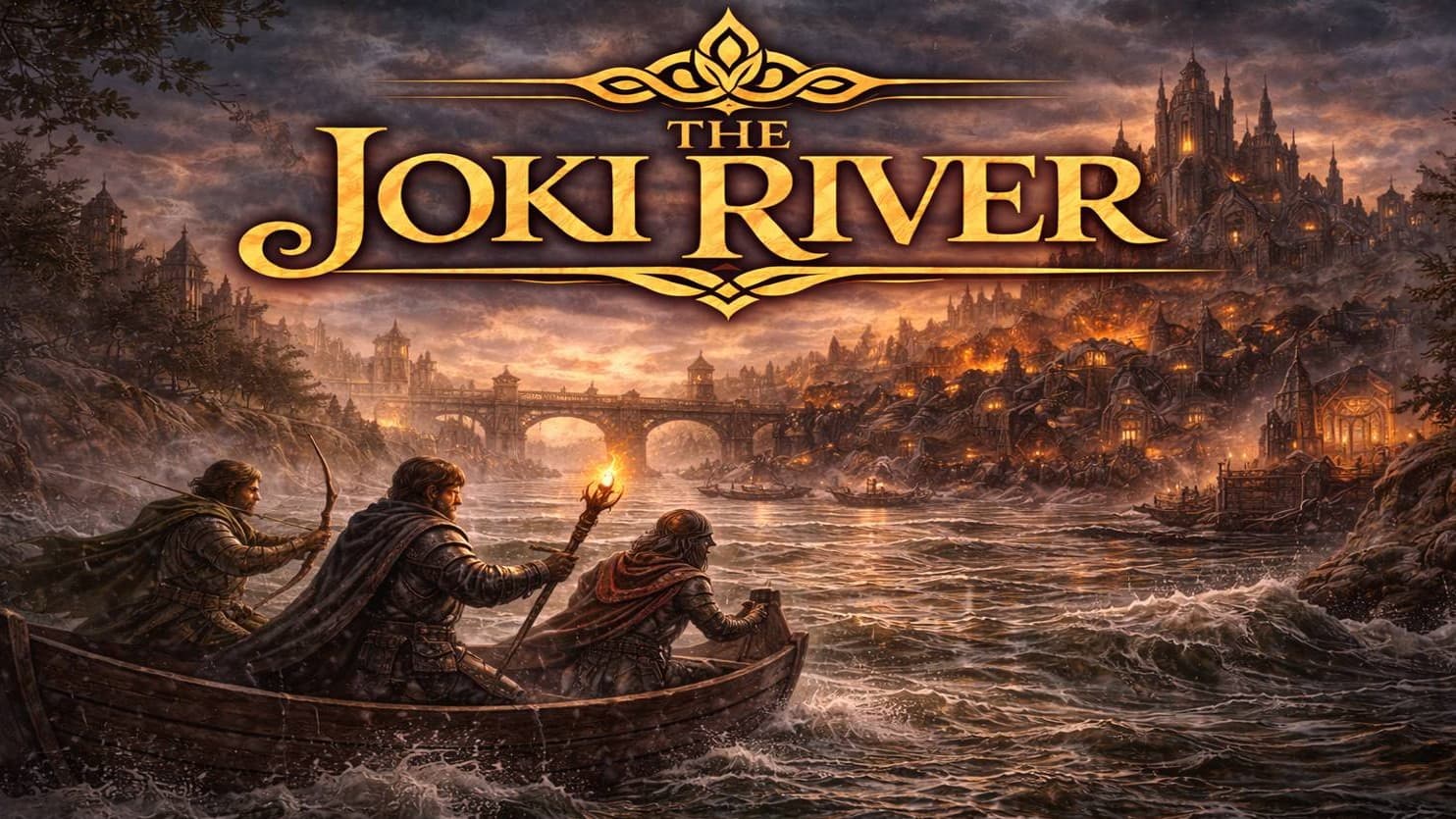
Image by JokiGPT
The Joki River
The Joki River begins as a bright river-road of bustling towns, colorful locals, and small troubles, then descends into a poisoned current of fear.
$15.00
/ Session
Details
3 players following this game
Bi-weekly / Thursday - 12:00 AM UTC
Jul 30 / Session 2
Session Duration / 3–4 hours
5 / 5 Seats Filled
Report Adventure

StartPlaying Money Back Guarantee
If your game doesn't happen, we guarantee a refund. Just reach out to StartPlaying Support. Refund Policy
Schedule
Meet your party members
5/5





About the adventure
**The Joki River** is a river-travel campaign for players who love lively roleplay, great group chemistry, meaningful character growth, and action that feels like it matters. It begins in the bright, bustling communities of **Brightwater Reach**, where the river is full of trade, festivals, rumors, ferries, markets, odd jobs, local politics, and unforgettable personalities; the early game is social, funny, adventurous, and full of chances to fall in love with the world before it starts to change. This is a campaign for people who enjoy **playing with others**, building party bonds, talking to NPCs, chasing leads, getting tangled in local trouble, and watching their characters become sharper, deeper, and more capable over time. You do not need to be a nonstop actor or a perfect tactician to thrive here, but you *will* get the most out of it if you enjoy jumping into scenes, making choices, and helping create a story bigger than any one character. The tone supports both big roleplayers and players who mainly want to hang out, battle, and grow into the game. The Joki itself is more than a road. It is a living mirror of the communities around it: when towns are decent, cooperative, and humane, the river is calmer; when corruption, fear, greed, and cruelty take hold, the water changes too. That means travel, combat, politics, and exploration are all tied together in a world where the environment reflects the moral state of the people living beside it. As the campaign moves downriver into **Midcurrent Reach** and eventually **Blackwater Reach**, the story darkens. What begins as colorful river adventure slowly becomes a struggle against grievance politics, public fear, selective control, and the rise of **Kurtz, the Warden of the Joki**—a tyrant who promises order while poisoning everything he touches. The core question of the campaign is simple and powerful: **can people taught to live by division choose to share a river again?** If you want a campaign with **memorable NPCs, travel, consequences, layered roleplay, exciting set pieces, meaningful fights, and real character growth**, The Joki River is built for exactly that. It is a story about adventure, community, pressure, courage, and what happens when ordinary people decide whether to stay passengers—or become the ones who push back.
Game style
Hexcrawl / Exploration
Realm Building
Roleplay Heavy
Rule of Cool (RoC)
Game themes
Meet the Game Master

5.0
(8)
1 year on StartPlaying
3 games hosted
Highly rated for: Creativity, Voices, Storytelling
Average response time: 4 hours
Response rate: 89%
About me
I’ve been immersed in Dungeons & Dragons for years, both as a player and behind the screen, crafting stories that balance epic adventure with unforgettable character moments. My games blend rich narrative, dynamic roleplay, and meaningful choices—whether you’re negotiating with a dragon, unraveling a mystery, or accidentally adopting yet another chaotic NPC. My style leans heavily into collaborative storytelling. I believe the best moments in D&D come from the unexpected, which is why I live by the philosophy of “yes, and.” Your wild ideas aren’t obstacles—they’re opportunities. I’ll meet your creativity with my own, building a world that reacts, evolves, and occasionally spirals into delightful madness.
View Profile →Character creation
Creating your character
## Character Creation Character creation should happen **before Session 1**, with the big choices discussed during **Session Zero**. Session Zero is where we’ll talk about tone, party fit, safety tools, campaign expectations, and how your character connects to the river; after that, players can finish sheets between sessions if needed. This campaign starts best at **Level 1**, especially if we begin in **Brightwater Reach**, where the story is meant to feel grounded, social, funny, and full of local trouble before the river darkens downstream. For stats, use **standard 5e methods agreed on by the table**. The cleanest options are **Standard Array** or **Point Buy**, since both keep the party balanced and easy to build around. I recommend avoiding unusually swingy stat generation unless everyone wants that style. Characters should be built to function **both in and out of combat**—this campaign supports plenty of action, but roleplay, travel, local politics, and problem-solving matter just as much. The world is built for a mix of player styles, and no class is pressured into being “the face” or solving every social scene alone. Create characters using **official 5e player options approved by the DM**. Stick to material that fits a **classic fantasy / old-school D&D tech level**: no firearms, no modern-feeling technology, and nothing that breaks the tone of a river-travel fantasy story. Magic exists and can be important, but the setting is still fundamentally grounded in people, places, boats, markets, shrines, guilds, and communities along the Joki. Most importantly, build someone who has a reason to **travel the river and stay with the party**. Great fits include drifters with a conscience, curious investigators, laborers, shrine-tied wanderers, traders, protectors, or people trying to prove something, atone for something, or protect someone. Harder fits are loners who refuse to cooperate, joke-only characters with no emotional grounding, or concepts built around sabotaging the group. When building, answer these questions: * What does your character want from the river? * What community, trade, person, or place makes the Joki matter to them? * Why would they keep traveling when things begin to get harder? * What rumor have they heard about the lower river? * Why do they choose to stay with this party? Bring your character idea to Session Zero, and we’ll make sure it fits the campaign, the table, and the story we want to tell together.
What to expect
Preparing for the session
## Preparation Before the campaign begins, players should make sure they are set up on the platforms we’ll actually use to play. The main tools for this game are **Discord** for communication and session play, **D&D Beyond** for character creation and sheet management, and **Roll20** as a recommended visual aid if maps, handouts, or tactical scenes are being used. The Joki River materials were built with a **5e / D&D Beyond-friendly** workflow in mind, so that should be your main character tool unless the DM says otherwise. ### What players should do before Session 1 **1. Join the Discord server** Make sure you are in the campaign or server Discord ahead of time. This is where announcements, scheduling, session links, recaps, rules clarifications, and between-session questions will happen. You should also make sure your Discord name is recognizable so the DM and other players know who you are. **2. Have a working microphone and stable connection** Voice communication matters a lot in this campaign because roleplay, improvisation, and group chemistry are a huge part of the experience. Test your mic, headphones, push-to-talk settings if you use them, and internet connection before the first session. **3. Create or update your D&D Beyond account** You should have a D&D Beyond account ready before character creation is finalized. Build your sheet there unless your DM gives another instruction. Make sure your character name, race, class, subclass if applicable, inventory, AC, HP, and spells are all entered clearly and correctly. **4. Build your character before Session 1** Bring at least a finished draft to Session Zero or complete the full sheet before the first real session starts. Your character should fit the tone of the campaign, have a reason to travel the river, and be someone who can function in both action scenes and social/story scenes. **5. Roll20 is recommended** If the table is using maps, make a free Roll20 account ahead of time and be ready to join the game link if one is provided. Roll20 is not always the primary platform, but it is strongly recommended as a backup or support tool for visual scenes, positioning, handouts, or combat. **6. Read the campaign intro material** Before play begins, read any player-facing campaign notes, setting overview, Session Zero packet, or house rules the DM shares. This helps everyone come in already understanding the tone, the river-travel structure, and the kind of story we are building together. **7. Be ready to participate** Preparation is not just technical. Come in ready to engage, roleplay, listen, collaborate, and help make the table fun for everyone. This campaign works best when players are willing to care about the world, the party, and the people they meet along the Joki.
What Mike Siscoe brings to the table
## What I Provide as a GM What you can expect from me is a game built around **great story, strong table chemistry, memorable roleplay, and plenty of action**. I try to strike a **50/50 balance between roleplay and combat**, while also mixing in skill-based challenges, travel pressure, social complications, and scenes where the party has to solve problems with creativity rather than just damage output. This is not a game where only one kind of player gets to shine. I like tables with deep roleplayers, tactical fighters, improv lovers, quiet observers, and “I’m here to hang out and hit things” players all sitting together and all having fun. I do **not** force any class or player into a single role. Charisma characters do not have to carry every social scene, and quieter characters are still absolutely part of the story. I balance around the characters the players actually bring me, so the game is shaped by the party rather than by some rigid “correct” way to play. I want players to feel free to build the characters they’re excited about, then discover how those characters fit into the river, the party, and the story. In terms of style, I lean heavily into **NPCs, atmosphere, tone, and living locations**. Expect colorful personalities, recurring faces, moral pressure, humor early on, and a world that feels inhabited. I absolutely support character voices, strong scene framing, and immersive descriptions, though the real goal is not theater perfection—it is helping the table feel like they are *in* the world. Ambient mood and strong visual presentation fit this campaign well, especially because the Joki is a river-travel story where place, people, and changing tone matter so much. Combat matters in this campaign, but it is not there just to fill time. Fights should feel like part of the story: public, messy, dangerous, political, emotional, or shaped by terrain and witnesses. Some combats will be intense and tactical, especially later in the campaign, but the goal is always **meaningful action**, not empty grind. The Joki is strongest when combat, roleplay, travel, and consequences all feed into one another. As for rulings, I am not interested in being a rules tyrant. I respect the rules because they keep the game fair and understandable, but I also want the game to stay alive, fun, and responsive. Clever ideas, strong roleplay, and creative problem solving matter. The goal is not to “beat” the players or shut down cool moments; the goal is to make those moments work inside a story that still has stakes. Most of all, I provide a game that wants you to **care**: about the party, the towns, the people, the rumors, the river, and what happens when things begin to change. If you bring curiosity, energy, and a willingness to engage, I’ll bring a world full of life, tension, action, and consequences worth caring about.
Homebrew rules
## Homebrew Rules At this point, there are **no major player-facing homebrew rules explicitly locked into the campaign materials** I’ve been given. The documents establish the **tone, world assumptions, campaign structure, encounter philosophy, and GM style** very clearly, but they do **not** lay out a formal list of custom table mechanics like “potions as a bonus action,” altered crits, harsher death saves, or other common house rules. The strongest canon signal is that the game is meant to feel like **classic fantasy 5e / old-school D&D in tone**, with no firearms, no modern-feeling tech, and a style that balances roleplay and combat rather than rebuilding the system from scratch. So the most accurate expectation to give players is this: **We are primarily using standard 5e rules, with DM rulings used to keep the game moving and to support fun, cinematic, story-driven play.** If any table-specific house rules are added, they will be explained clearly before they matter in play. That said, the campaign *does* make room for a few important style expectations that function like soft rules: * **Creativity matters.** Players should expect clever ideas, roleplay, witness protection, social pressure, terrain, and public consequences to matter just as much as damage numbers in many scenes. * **Combat is part of the story.** Encounters are not meant to be isolated math problems; they often include crowds, records, bells, floodgates, witnesses, queues, or moral stakes. * **The campaign adapts to the party.** The Alealamia FAQ makes it clear that the DM balances around the players and does not force classes into narrow roles, especially in social scenes. * **Tone and consequences matter.** The river itself reflects the moral and civic condition of the communities around it, so player choices may affect the world in ways that are narrative, environmental, and political—not only mechanical. So for a player-facing rules blurb, I’d phrase it like this: **Homebrew Rules:** We are mostly using standard 5e rules. There are currently no major custom mechanical overhauls locked in for character play. Expect rulings that support pacing, creativity, and cinematic storytelling, especially in scenes involving travel, crowds, politics, witnesses, and river hazards. If any specific house rules are added, they will be shared clearly before Session 1.
Equipment needed to play
Internet
Computer
Microphone
Platforms used
Safety
How Mike Siscoe creates a safe table
## Safety I want this game to be **fun, collaborative, and comfortable for everybody at the table**. The Joki River can start bright and funny, but it absolutely moves into darker themes as the campaign goes on—fear, corruption, cruelty, authoritarian control, social division, and communities under pressure are all part of the story. Because of that, I want us to be clear from the beginning that **player comfort matters more than any scene, twist, or dramatic moment**. At **Session Zero**, we’ll go over tone, content limits, and table expectations together. I want everyone to have room to say what they are okay with, what they are not okay with, and what they would rather keep offscreen or only lightly referenced. That means talking through **Lines and Veils**, any hard no-go subjects, and anything that might hit too close to home. This campaign can deal with heavy themes, but it should never come at the cost of making the people at the table feel unsafe or trapped in a scene. My approach is pretty simple: **if something is making a player uncomfortable, we change course**. No debate, no pressure, no one having to “prove” they are uncomfortable enough. If a scene needs to fade to black, skip ahead, get rewritten on the fly, or just be dropped entirely, that is what we do. I would much rather lose a scene than lose trust at the table. For tools, I like keeping things straightforward and low-pressure: * Players can message me privately at any time before, during, or after a session. * If we are on voice/video, you can say “pause,” “skip,” or just message me directly instead of calling attention to yourself. * If we use **X, N, and O** style check-ins, they can be done in chat, by DM, or however is easiest for the player in the moment. * Nobody has to explain themselves on the spot if they do not want to. I also want to be clear that safety is not just about extreme content. It is also about **tone, spotlight, pressure, and group behavior**. Nobody should feel bullied, talked over, cornered, or pushed into roleplay they do not want. I love strong roleplay, big character moments, and people getting invested, but I do not want anyone feeling like they have to perform at a certain level to belong here. This is a table where deep roleplayers, quieter players, heavy combat players, and people still finding their groove are all welcome. That has always been a big part of how I run games: I balance around the players I have, not the players I wish I had. I also do **check-ins**, especially after heavier sessions. If we have a session that gets intense emotionally or deals with especially dark material, I will usually follow up after the game to make sure everyone is good. Sometimes that just means asking how people felt about the session, what landed well, and whether anything needs adjusting. Safety is not just a Session Zero topic—it is something we keep an eye on the whole campaign.
Content warnings
Safety tools used