Melendor Chronicles: The Ghost Of Genion
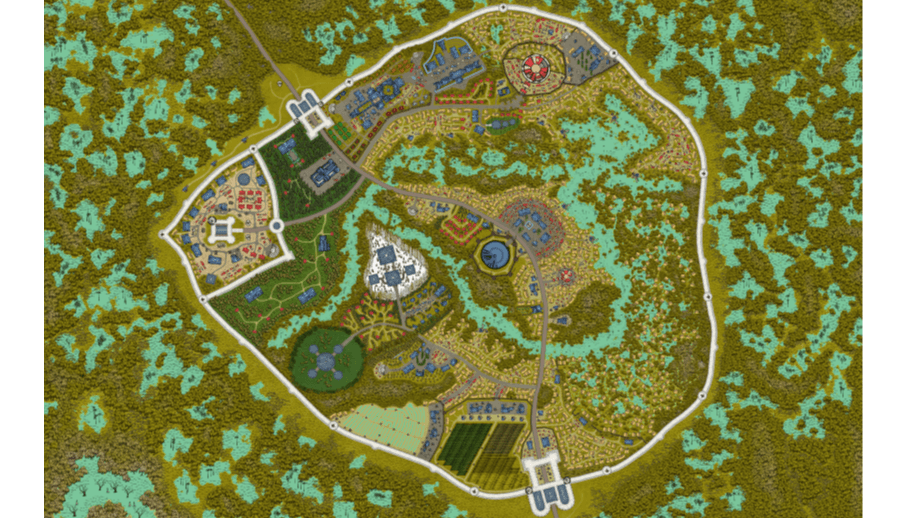
For a century, the town of Sel has survived behind a magical barrier, sheltered from a world transformed by apocalypse. Your story begins inside.
$15.00
/ Session
Details
1 player following this game
Weekly / Thursday - 5:00 PM UTC
Session Duration / 3–4 hours
Campaign Length / 30+ Sessions
0 / 5 Seats Filled
Report Adventure

StartPlaying Money Back Guarantee
If your game doesn't happen, we guarantee a refund. Just reach out to StartPlaying Support. Refund Policy
About the adventure
A century ago, the world ended. Civilization survived behind walls of magic. The campaign begins in the Deadlands, a region of Melendor where civilization exists as scattered islands of safety. Cities and settlements endure beneath enormous magical barriers, while beyond them stretches a wilderness transformed by an apocalyptic war fought a hundred years ago. People have rebuilt. Trade continues. Cities have grown. Most inhabitants have never known any other world. But the past isn't quite as dead as everyone would like it to be. Your story begins in Sel, one of the settlements protected from the wilderness beyond. What starts relatively small will gradually take you across the Deadlands and beyond: through strange cities, forgotten places, dangerous expeditions, political conflicts, old mysteries and whatever completely unforeseen direction your party decides is suddenly more interesting than what I prepared. Melendor Chronicles: The Ghost of Genion is a long-form, fully homebrew D&D campaign intended to take characters all the way to level 20—and give you time to actually play at level 20 once you get there. Expect a mixture of roleplay, exploration and tactical combat, with different parts of the campaign naturally leaning more heavily toward one or another. Melendor is a high-magic world with a long history behind its current age: sometimes serious, sometimes strange, occasionally absurd, and rarely divided neatly into good guys and bad guys. There is an overarching story and mysteries to uncover, but the route through them belongs to the players. I embrace improvisation and player agency heavily. Your choices determine which threads become important, which characters, groups or factions become allies or enemies, and which parts of the world we end up exploring. Not every monster needs to be fought. Not every problem has one correct solution. And if the party decides the obvious quest or storyline can wait because that suspicious deer clearly knows something? Well, I guess we're investigating the deer.
Game style
Rules as Written (RaW)
Game themes
Meet the Game Master

5.0
(5)
Less than a year on StartPlaying
Highly rated for: Knows the Rules, Storytelling, World Builder
About me
Been playing tabletop games for a long time, started DMing/GMing some time in 2017. Had a prolonged stint of online sessions/campaigns during COVID, but lately I've mostly been playing and GMing with/for my friends. For D&D, I almost exclusively run homebrew campaigns in my own worlds. The main world is called Melendor, but I've been working on other parts of my multiverse throughout the years (you may or may not visit some of them, depending on what you do ingame). I developed my own pantheon and lore that's continuously evolving as I'm working on different parts of it. The sort of "main" continent has clearly defined regions with their own inner politics and intrigues. I aim to send my players on immersive high fantasy adventures with meaningful combat, dangerous environments and collaborative storytelling. I generally lean toward a more serious/grounded tone, but there’s always more than enough room for humor and absurd moments when they happen naturally. Player decisions meaningfully influence both the story and the world around them. I enjoy both tactical gameplay & creative character building as well as roleplay-heavy sessions with lots of dialogue and sometimes exposition when needed. Players who like both experimenting with mechanics and strategies and engaging in story-focused moments when appropriate will probably feel at home in my games. I try to keep the table welcoming and cooperative rather than overly competitive or adversarial.
View Profile →Character creation
Creating your character
I expect my players to come to the first session with at least some idea of a character they'd like to play. Now whether that's a Fighter or a Ranger can be discussed and brainstormed during session zero. I'm using Point Buy as a default to ensure everyone has equivalent spread, but if the entire party wants to roll for stats, I'm not going to oppose it. We're starting at level 1 and using the 2024 D&D 5e rules as our baseline. Official character options are generally welcome, including backwards-compatible material from the 2014 rules, though I reserve the right to review or make rulings on unusual interactions. Since I'm using Roll20 as my VTT, all the character sheets do need to be created and fleshed out in the actual Roll20 game that you will be invited to. Backstory is not mandatory right away (maybe you gradually discover your character's origins over the first few sessions), but eventually I'd like for everyone to have some kind of background info.
We start at level 1. We'll go over each and every one of your characters during session 0 and I'll give each character a minor magical item to start with. It would be prudent that you have a balanced party composition rather than heavily leaning into similar archetypes/classes, but it's absolutely OK if everyone wants to play Barbarians - it just means we'll have one very angry campaign. I'm using milestone advancement for leveling up your characters and you will reach level 20 at some point during the campaign. So, if you want, you can theory craft your character's level progression upfront.
What to expect
Preparing for the session
You'll need free accounts for Roll20 and Discord. We'll use Roll20 for the VTT, character sheets, maps and dice rolls, and Discord for voice chat and communication between sessions. No additional software is required.
What Darth Bober brings to the table
I run a mix of roleplay, exploration and tactical combat, with different sessions naturally leaning more heavily toward one or another. Combat can be challenging and I don't shy away from putting characters in genuinely dangerous situations, but I'm not trying to kill you—the world simply won't always scale itself around what would be convenient for the party. I generally follow the rules, but I'm more than comfortable making rulings when something unusual comes up rather than stopping the game for twenty minutes to investigate every possible interpretation. I embrace creative solutions and the Rule of Cool when they make sense, but that doesn't mean anything automatically works just because it sounds cool. Improvisation is probably my biggest strength as a GM. There's an overarching world and story, but I'm happy to follow the players when they take things somewhere unexpected. If you want to try something I didn't anticipate, my default response is usually some variation of: "You can certainly try." I use Roll20 for maps, tokens and combat, Discord for voice, and ambient music when appropriate. I'm not a professional voice actor, but NPCs will have their own personalities and, when my vocal cords cooperate, voices.
Homebrew rules
Here are some because it would be too long to list them all (I'll send you a file with all houserules in session 0) - I maximize one die worth of damage on critical hits. For example, 1d8+3 becomes 2d8+3 on a critical hit. In my games, it becomes 1d8+8+3. Attacks with multiple damage dice (2d6, 3d8...) still only maximize one die worth of base attack damage (weapon or spell). In case you have multiple damage sources (weapon + Divine Smite for example), we're still going to max out the base damage only (weapon or spell). - Shield spell – If the attack hits, the player has the right to ask “Would an AC of 25 be a miss?” before casting the spell. That way I don't abuse my DMing meta knowledge while still not fully revealing the monsters' attack bonuses, which seems like the best compromise. - We're using the 2014 version of the Counterspell because the new one is just not fun at all. - Insight rolls on truth/lie - even on a successful check, the player doesn’t necessarily get to figure out whether a creature is lying, especially if a player sees the creature for the first time in his/her life. Sometimes a success is merely a very, very strong hunch that the creature the player's character is interacting with is saying some funky stuff. Exceptions may apply, for example Ranger with Favored Enemy being goblins, speaking to a goblin.
Equipment needed to play
Internet
Computer
Microphone
Platforms used
Safety
How Darth Bober creates a safe table
We'll discuss boundaries and expectations during Session 0, including establishing Lines & Veils so everyone knows what content should be avoided or kept off-screen. Communication stays open throughout the campaign. If something comes up during play that makes you uncomfortable, you're always welcome to let me know privately, and we'll adjust accordingly. After each session, everyone is encouraged to share feedback either by voice or in a dedicated Discord channel. I use Stars & Wishes as a simple framework for this: what you particularly enjoyed during the session, and what you'd like to see more of in the future. My goal is to make sure everyone is comfortable communicating their boundaries and feedback without turning it into a complicated process.
Content warnings
Safety tools used